Published by:

Dalibor Vuchikj
8 Aug 2024
My vision is to support companies and organizations in the development and implementation of mechanical engineering and operational projects. As a Mechanical Engineer by education, combined with a deep passion for new technologies. Specialize in offering cutting-edge digital methods and technologies, including 3D scanning, intelligent 3D modeling, documentation, 3D data processing and optimization, analysis, simulations, VR integration, and more.

Improving Safety in Factory Layouts with Extended Reality (VR and AR)
Extended Reality (XR) can help engineering and safety teams review factory layouts and identify safety risks before changes are made on site. Technologies such as Virtual Reality (VR), Augmented Reality (AR), and Mixed Reality (MR) provide practical tools for reviewing working areas, equipment positions, workflows, and safety requirements.
Safety Planning
Factory layouts can be reviewed in a virtual environment before equipment is installed or physical changes are made. This helps teams identify potential risks such as equipment collisions, limited access to emergency exits, restricted working areas, or ergonomic problems that may be difficult to notice in traditional 2D drawings.
VR simulations allow engineers, operators, and safety teams to walk through a factory layout at full scale. This provides a clear view of the planned environment and helps identify safety issues early in the design and planning process.
Safety Training and Risk Reduction
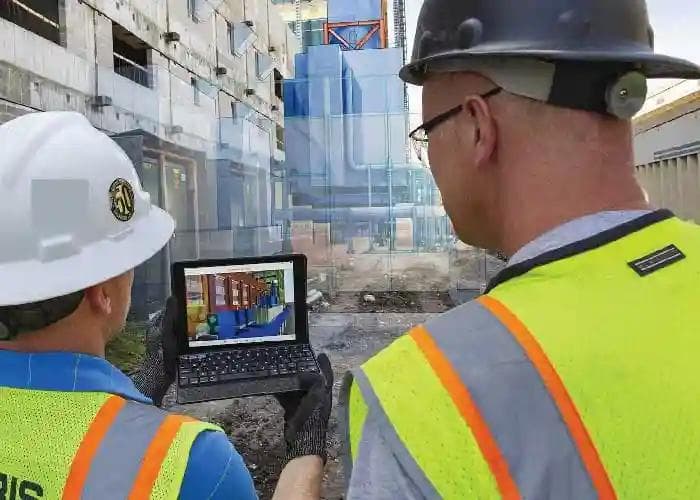
AR can display safety information, instructions, and digital content directly within the physical workspace. Workers can use this information while performing tasks, inspecting equipment, or following work procedures.
VR can also be used for safety training. Workers can practice tasks and emergency procedures in a virtual environment based on real working conditions. This allows teams to learn and test procedures without exposing people or equipment to unnecessary risks.
Reviewing Changes Before Implementation
XR can also support safety reviews when factory layouts, equipment, or production processes are changed. Different solutions can be tested in a virtual environment before they are implemented on site.
Teams can simulate situations such as equipment failure, changes in production flow, new equipment installation, or changes to working areas. This provides additional information for evaluating safety procedures and identifying possible problems before work begins.
Conclusion
Using XR for factory layout and safety analysis gives engineering teams another way to review projects before making physical changes. VR, AR, and MR can help identify safety issues, improve training, review workflows, and test different solutions in a controlled environment.
By finding potential problems earlier, companies can make better decisions, reduce unnecessary changes on site, and create safer and more efficient industrial workplaces.