Published by:

Dalibor Vuchikj
6 May 2024
My vision is to support companies and organizations in the development and implementation of mechanical engineering and operational projects. As a Mechanical Engineer by education, combined with a deep passion for new technologies. Specialize in offering cutting-edge digital methods and technologies, including 3D scanning, intelligent 3D modeling, documentation, 3D data processing and optimization, analysis, simulations, VR integration, and more.

Improving Design Reviews with Extended Reality (XR)
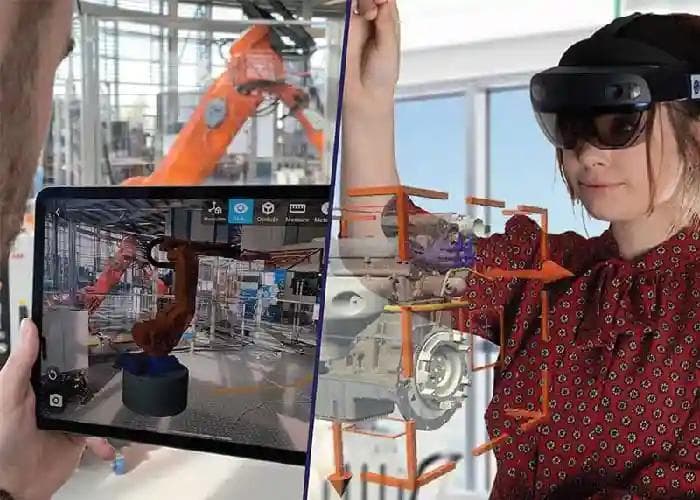
Extended Reality (XR) provides engineering teams with a practical way to review 3D designs at full scale before physical implementation. Instead of evaluating complex equipment, installations, and factory layouts only through 2D drawings or desktop-based 3D models, teams can enter an immersive environment and examine spatial relationships from a more realistic perspective.
Full-Scale Design Reviews
Viewing a 3D model at full scale can reveal design details that are difficult to identify on a conventional screen. Engineers can evaluate equipment positioning, available working space, accessibility, maintenance areas, clearances, and the relationship between different components within an industrial environment.
For manufacturing and mechanical engineering projects, this can be particularly useful when reviewing factory layouts, production lines, mechanical installations, piping systems, equipment arrangements, and planned modifications to existing facilities.
Early Collaboration and Design Verification
XR design reviews allow project teams and stakeholders to evaluate a proposed design before installation or construction begins. Multiple disciplines can review the same 3D environment, discuss potential issues, and provide feedback while the project is still in the design stage.
Measurements, design specifications, spatial requirements, and equipment locations can be reviewed directly within the 3D environment. Comments and observations can also be connected to specific areas of the model, helping teams communicate technical issues with greater context and reducing the possibility of misunderstandings between stakeholders.
Identifying Issues Before Implementation
One of the main advantages of XR-based design reviews is the ability to identify potential problems earlier in the project lifecycle. Full-scale visualization can help teams detect insufficient access, equipment conflicts, unsuitable layouts, restricted maintenance areas, or other spatial issues before work begins on site.
Resolving these issues during the design phase can reduce the need for later modifications, rework, and interruptions during installation. This is particularly valuable for complex industrial projects where changes made during construction or equipment installation can affect project schedules and costs.
Remote Design Reviews and Collaboration
XR can also support remote collaboration between engineering teams, clients, contractors, and other project stakeholders. Participants located in different places can review the same digital environment without needing to be physically present at the project site.
This approach can reduce unnecessary travel while allowing technical discussions and design reviews to take place around a shared 3D representation of the project. It can be especially useful for international engineering projects involving teams distributed across multiple locations.
From 3D Data to Immersive Engineering Environments
Existing CAD, BIM, and as-built 3D models can be prepared and optimized for use in VR, AR, and XR applications. Point cloud data captured through 3D laser scanning can also provide an accurate representation of existing industrial facilities, allowing proposed equipment or modifications to be evaluated within the context of real site conditions.
By combining accurate 3D data with immersive visualization, XR design reviews provide engineering teams with an additional tool for evaluating designs, improving coordination, and supporting informed decisions before physical implementation.
At IN3D Technology, we develop XR solutions for industrial and mechanical engineering projects, transforming engineering data into interactive environments for design reviews, project planning, simulations, training, and technical presentations.